All Categories
Featured
Table of Contents
Register to get the most current updates on all our occasions.
Enhancing ease of working through compensation incentives for federal government fees, land refunds, R&D and tax. Lowering customizeds expenses and improving procedures, in addition to presenting regulative reforms for industrial and real estate laws, and elevating requirements by introducing a digital geographic details system (GIS) mapping for industrial land search, and a unified examination program for quality assurance.
In the early 1960s, Singapore set out to transform Jurong, then a remote, crocodile-infested swamp, into a commercial estate. By the end of that years, factories stood where mangroves once grew, and Jurong had become the industrial heart beat of Singapore's economy.
Comparing Industrial Strategy Models across the GCC
Half a century later, an equally ambitious experiment has actually been unfolding in the Arabian Gulf. Over the past two decades, Dubai has actually pursued a vibrant strategy to diversify its economy beyond conventional sectors and construct a commercial base from the ground up. Central to this effort is Dubai Industrial City (DIC), released in November 2004 as part of a more comprehensive strategy to develop a first-rate manufacturing center in the emirate.
The goal was clear: reinforce the commercial sector's contribution to Dubai's GDP, establish devoted zones for manufacturing, and better link financiers to local markets. In other words, Dubai Industrial City was conceived as a useful step toward a more varied and sustainable economy. In the 1990s, Dubai's management acknowledged that the economy of the future could not rely on sophisticated services alone, it also needed a productive engine to turn soft understanding into difficult worth.
This caused the statement in November 2004 of Dubai Industrial City as a project "to develop a more balanced economic development model and increase the contribution of innovative productive sectors to GDP." Not long after the launch of Dubai Industrial City, Sheikh Mohammed bin Rashid Al Maktoum highlighted the broader purpose behind such industrial initiatives.
From that minute, Dubai Industrial City ended up being a lab for brand-new commercial policies. The city's preliminary plan centered on 6 specialized zones devoted to essential sectors, varying from food and beverage and machinery to metal products, standard metals, transportation equipment, and chemicals, paired with generous incentives. Infrastructure was constructed to high requirements, and customizeds and tax exemptions were put in place to bring in early investment inflows.
Twenty years on, the city is home to more than 350 operating factories across sectors like food, metals, machinery, plastics, and clean energy, serving a network of over 800 regional and global companies. Industrial land tenancy has reached 97% according to the most recent information. In practice, Dubai Industrial City is no longer simply a logistics zone, it has actually ended up being a platform for advanced manufacturing and development that places human capital at the heart of the development formula.
How Future-Focused Strategy Reshapes the 2026 Regional Economy
Dubai's leading leadership acknowledged the significance of this industrial drive early on. By the start of 2016, as Dubai Holding's different tasks (consisting of Dubai Industrial City) revealed strong outcomes, Mohammed Al Gergawi, then Chairman of Dubai Holding, the moms and dad business of TECOM Group, which was charged with establishing the commercial city and other specialized totally free zones, said: "Dubai Holding continues its outstanding performance, having actually become a main part of the material of the economy and daily life, and [is] performing its method to establish and support a knowledge economy based on continuous innovation in line with Dubai's vision and ambition to transform into the most intelligent and most productive city in the world." This declaration highlighted how deeply the commercial task had actually woven itself into Dubai's more comprehensive development story.
The area's largest seaport, Jebel Ali Port, was in place, along with a rapidly expanding international airport. This powerful mix of sea, air and road links indicated investors might import basic materials and export finished products with extraordinary ease, avoiding the pricey hold-ups that when afflicted regional trade. Equally crucial was the pro-business regulatory environment.
Inputs brought into free zones were duty-free, and goods re-exported to markets outside the Gulf Cooperation Council (GCC) also got away tariffs, a setup that greatly increased the appeal of export-oriented production. Studies by federal government agencies at the time showed that lifting bureaucratic difficulties and providing a flexible mix of industrial land choices plus monetary rewards would open enormous capital flows into the manufacturing sector.
The Evolution of Regional GBS Models in the GCC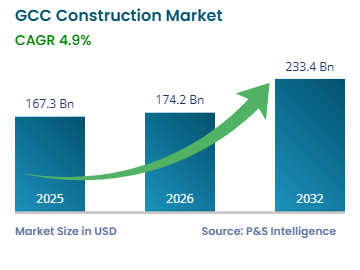
It remained in this favorable context that Sheikh Mohammed bin Rashid, provided the historic decree developing Dubai Industrial City in late 2004. The task formed part of Dubai's enthusiastic technique to diversify its economic base, and from the start it was created to bring in commercial investors from around the world.

Latest Posts
Bridging Policy and Operational Performance Across the Gulf
Accelerating Regional Industrial Expansion Strategies
Optimising Operational Efficiency through Advanced Market Research